Category: Uncategorized

Crispy Tofu with Napa Cabbage, Snow Peas & Shiitake Mushrooms

Crispy Tofu with Napa Cabbage, Snow Peas & Shiitake Mushrooms

Crispy Tofu with Napa Cabbage, Snow Peas & Shiitake Mushrooms

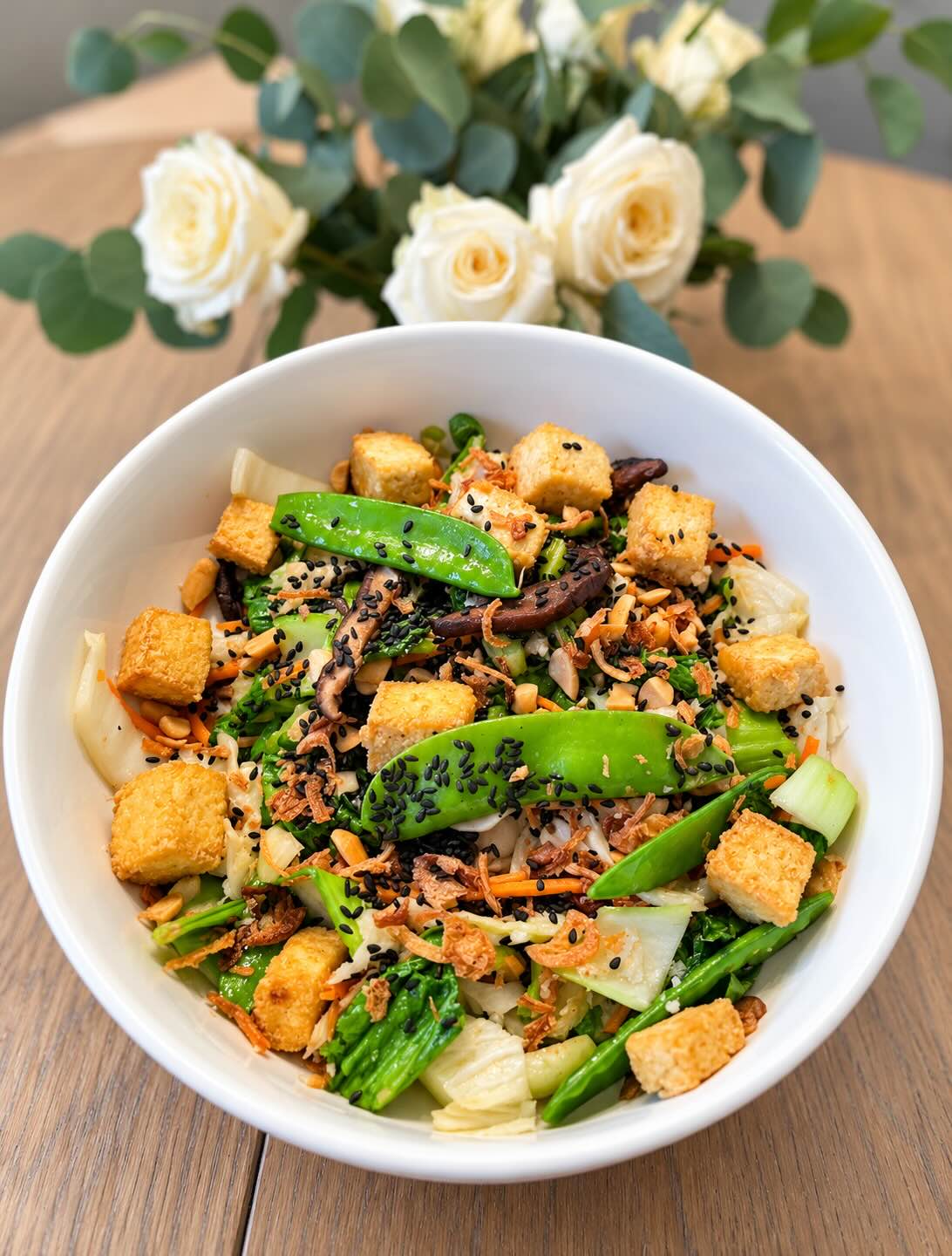
Crispy air-fried tofu meets tender shiitake mushrooms, crunchy snow peas, and Napa cabbage in a ginger-garlic sesame sauce. Chopped peanuts, scallions, and black sesame seeds add a flavorful finish.
Servings: 3
Course: Main Course
Cuisine: Asian

Ingredients
  

Crispy Tofu
  • 1 block extra-firm tofu 14 ounces, drained and pressed
  • 1 tablespoon arrowroot starch
  • ½ teaspoon garlic powder
  • ¼ teaspoon salt
  • 2 teaspoons avocado oil
Vegetables
  • 6 cups chopped Napa cabbage
  • 2 cups snow peas strings removed
  • 5 ounces shiitake mushrooms stems removed and caps sliced
  • 1 teaspoon avocado oil
  • 3 garlic cloves minced
  • 1 tablespoon grated fresh ginger
Sauce
  • 2 tablespoons reduced-sodium tamari or soy sauce
  • 2 tablespoons unseasoned rice wine vinegar
  • 2 teaspoons toasted sesame oil
  • 1 teaspoon maple syrup
  • 2 tablespoons water
  • ½ teaspoon arrowroot starch
  • ¼ teaspoon red pepper flakes optional
Toppings
  • ¼ cup chopped unsalted peanuts
  • 3 green onions sliced
  • 1 tablespoon black sesame seeds
  • Lime wedges optional

Method
 

  1. Prepare the tofu: Press tofu for 15–20 minutes, then cut into cubes. Pat dry and toss with avocado oil, garlic powder, and salt. Sprinkle with arrowroot and toss until lightly coated.
  2. Air-fry: Arrange in a single layer in a preheated air fryer at 400°F. Cook for 12–16 minutes, shaking halfway through, until golden and crisp. Work in batches if needed.
  3. Mix the sauce: Whisk all sauce ingredients together until the arrowroot dissolves.
  4. Brown the mushrooms: Heat the remaining teaspoon of avocado oil in a large skillet or wok over medium-high heat. Add mushrooms and cook for 4–5 minutes, stirring occasionally.
  5. Cook the vegetables: Add garlic and ginger; stir for 30 seconds. Add the cabbage’s thicker white pieces and snow peas; cook for 2 minutes. Add the leafy cabbage and cook for another 1–2 minutes, keeping the vegetables slightly crisp.
  6. Add sauce: Whisk the sauce again, pour into the skillet, and toss for 1–2 minutes until lightly thickened.
  7. Finish: Gently fold in the tofu just before serving, or place it on top to preserve its crispness. Sprinkle with peanuts, green onions, and black sesame seeds. Add lime juice if desired.

Notes

Nutrient Approximate amount
Calories 350 kcal
Protein 23 g
Total carbohydrate 25 g
Dietary fiber 6 g
Total fat 20 g
Saturated fat 3 g
Sodium 650 mg
Serving suggestion: Enjoy as a vegetable-rich bowl, or serve with brown rice or quinoa for a more substantial meal.
High-Protein Avocado, Arugula & Smoked Salmon Toast

High-Protein Avocado, Arugula & Smoked Salmon Toast

High-Protein Avocado, Arugula & Smoked Salmon Toast

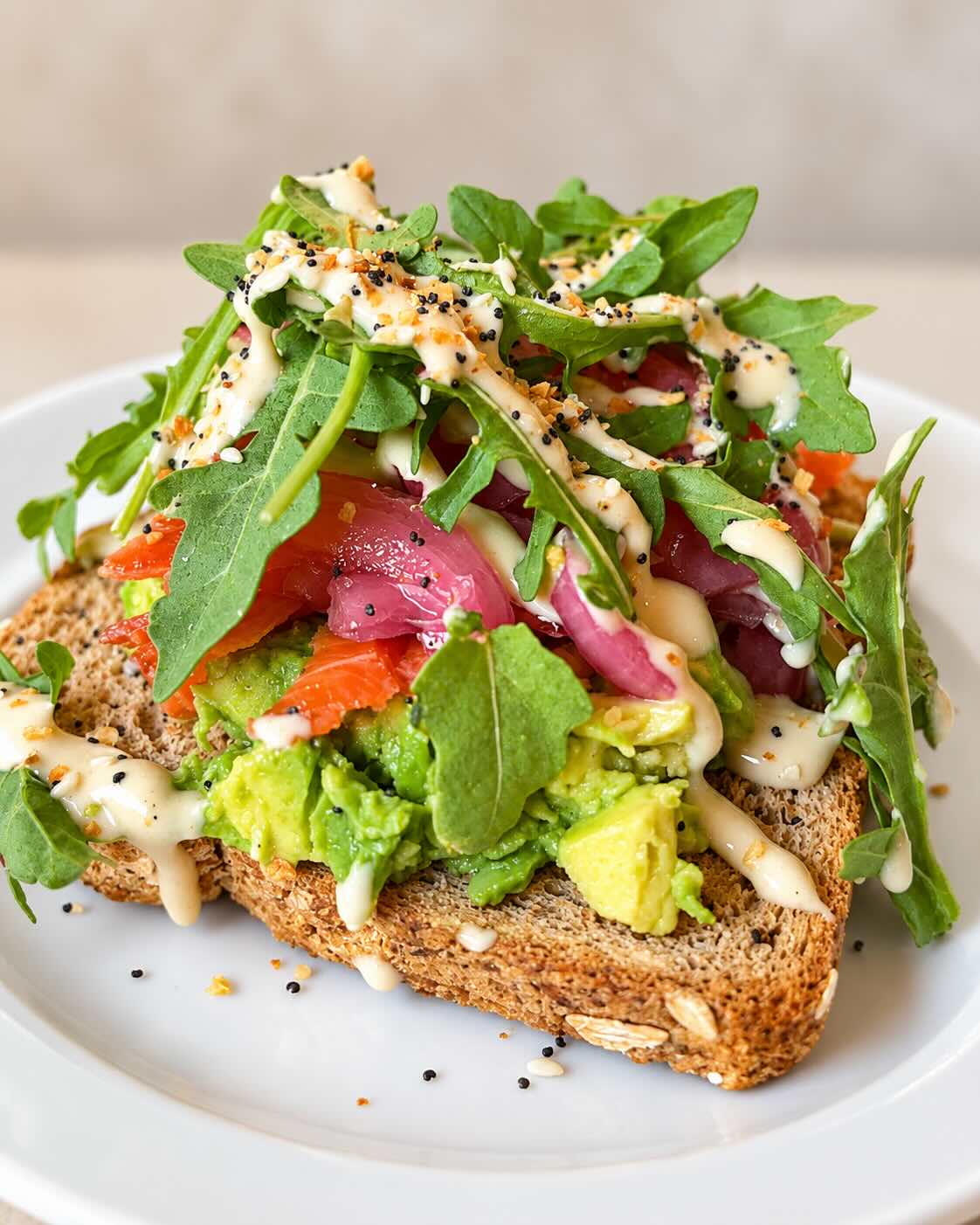
Creamy avocado, smoky salmon, peppery arugula, and tangy pickled red onions piled onto crisp sprouted-grain toast. Finished with a lemon-tahini drizzle and everything bagel seasoning, this satisfying breakfast or lunch combines protein, fiber, and unsaturated fats for a satisfying blood sugar balancing breakfast.
Course: Breakfast
Cuisine: Mediterranean

Ingredients
  

  • 1 slice Ezekiel sprouted whole grain bread
  • ½ medium avocado approximately 75 g
  • 3 ounces smoked salmon
  • ½ cup loosely packed arugula
  • 2 tablespoons Cleveland Kitchen Pickled Red Onions drained
  • ½ teaspoon everything but the bagel seasoning
  • 1 tablespoon tahini
  • 1 teaspoon extra virgin olive oil
  • 1/2 tablespoon fresh lemon juice
  • 1–2 teaspoons water to thin
  • – optional

Method
 

  1. Toast the bread until crisp and golden.
  2. Make the drizzle: Whisk together tahini, olive oil, and lemon juice. Gradually add water until pourable. Taste before adding salt.
  3. Add avocado: Lightly mash the avocado and spread over the toast.
  4. Layer the toppings: Add smoked salmon, pickled red onions, and arugula.
  5. Finish: Drizzle with the tahini sauce and sprinkle with everything bagel seasoning. Serve immediately.

Notes

Nutrient Amount
Calories 465
Protein 25 g
Total carbohydrate 33 g
Fiber 10 g
Total sugars 6 g
Total fat 29 g
Saturated fat 4.5 g
 
Chicken Meatball, Kale & Sweet Potato Bowl

Chicken Meatball, Kale & Sweet Potato Bowl

Chicken Meatball, Kale & Sweet Potato Bowls

Chicken Meatball, Kale & Sweet Potato Bowls

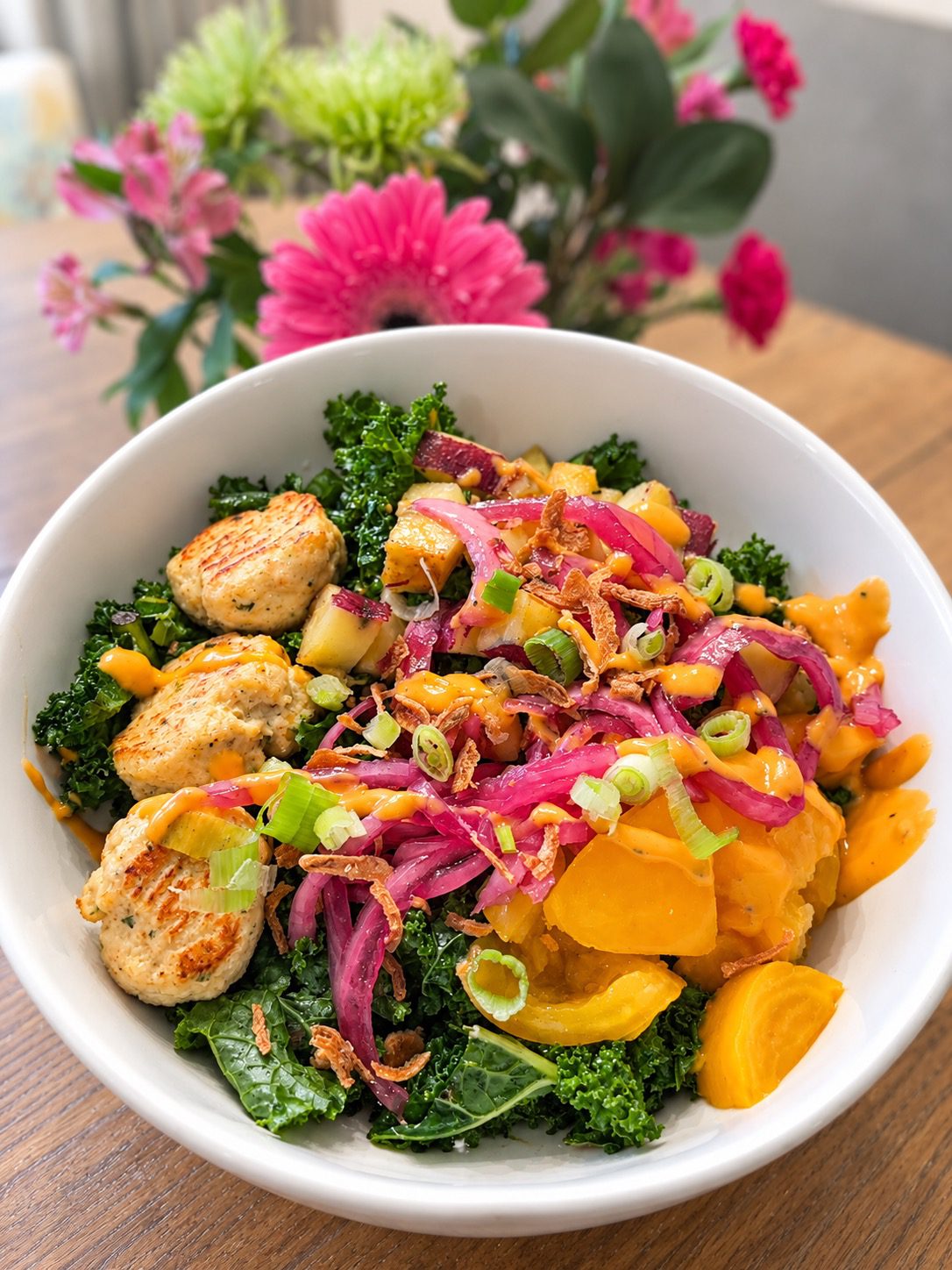
Tender feta-herb chicken meatballs served over steamed kale and roasted sweet potatoes, with fresh heirloom tomatoes, tangy pickled onions, crispy shallots and a creamy Yum Yum drizzle.
Serves: 4 • Makes: 16 meatballs • Total time: About 45 minutes
Servings: 4
Course: Main Course
Cuisine: Mediterranean

Ingredients
  

  • – 1 pound ground chicken approximately 92% lean
  • – ¼ cup gluten-free breadcrumbs about 30 g
  • – 2 tablespoons ground flaxseed about 14 g
  • – 3 tablespoons water
  • – 1 large egg
  • – ⅓ cup crumbled feta about 2 ounces
  • – 2 garlic cloves minced
  • – 2 tablespoons chopped fresh parsley
  • – 1 teaspoon dried oregano
  • – ¼ teaspoon salt
  • – ¼ teaspoon black pepper
  • – 2 medium sweet potato cubed with skins on
  • – 1 tablespoon olive oil
  • – ½ teaspoon smoked paprika
  • – ¼ teaspoon salt
  • – 12 ounces kale tough stems removed and leaves chopped
  • – 2 medium heirloom tomatoes about 300 g total, diced
  • – 2 scallions thinly sliced
  • – ½ cup drained pickled red onion
  • – ¼ cup Trader Joe’s Fried Shallots
  • – ¼ cup Primal Kitchen Yum Yum Sauce
  • – 1–2 tablespoons water optional, to thin the sauce

Method
 

  1. Roast the sweet potatoes. Preheat the oven to 425°F. Toss the sweet potatoes with olive oil, smoked paprika and ¼ teaspoon salt. Spread on a parchment-lined sheet pan. Roast for 25–35 minutes, tossing halfway through.
  2. Hydrate the flax. Mix the ground flaxseed with 3 tablespoons water. Let stand for 5 minutes to thicken.
  3. Prepare the meatballs. Combine the hydrated flax, breadcrumbs, egg, feta, garlic, parsley, oregano, salt and pepper. Add the ground chicken and mix gently until just combined.
  4. Shape and bake. Form into 16 meatballs and arrange on a separate parchment-lined sheet pan. Bake for 15–20 minutes, until the centers reach 165°F on a food thermometer.
  5. Steam the kale. Steam over simmering water for 4–6 minutes, until tender. Drain well.
  6. Assemble the bowls. Divide the kale and roasted sweet potatoes among four bowls. Add four meatballs per bowl, then the tomatoes, scallions and pickled red onions.
  7. Finish with sauce and crunch. Thin the Yum Yum Sauce with water if desired. Drizzle each bowl with 1 tablespoon sauce and sprinkle with 1 tablespoon crispy shallots just before serving.

Notes

Estimated nutrition per serving

Includes four meatballs, one-quarter of the vegetables and toppings, and 1 tablespoon Yum Yum Sauce.
Nutrient Per bowl
Calories 595
Protein 31 g
Total carbohydrate 52 g
Dietary fiber 10.5 g
Total sugars 13 g
Total fat 28 g
Saturated fat 7 g
Sodium Approximately 800 mg
Carbohydrate : fiber ratio Approximately 5:1
Good vs Bad Gut Bacteria

Good vs Bad Gut Bacteria

There is an ongoing battle going on for survival in your intestines between good vs bad bacteria. And the winning team is directionally proportional to how many plant based foods you eat. Space and nutrients are limited, and only the strongest will survive. Researchers estimate over 100 trillion microbes from anywhere between 500-1000 different species residing within the human intestines, alongside countless numbers of viruses and fungi. The composition and balance of these bacteria are constantly changing, with factors such as age, diet, lifestyle and antibiotic exerting the most influence.

Beneficial Gut Bacteria

The good guys (such as Bifidobacterium, Lactobacillus) live symbiotically with us, thriving on plant based prebiotic fibers (the more colorful the better) and resistant starches (the parts of grains, seeds, legumes we are unable to digest) and converting them into inflammation reducing short chain fatty acids and brain boosting neurotransmitters. The metabolites they produce in the way of short chain fatty acids also help to maintain a low acid environment in the colon, which discourages the growth of acid loving pathogenic bacteria. As if those benefits are not enough to make you want to add more fruits and vegetables to your diet, these healthy bacteria also make important contributions to human metabolism and physiology by converting the plant based fibers we are unable to digest and into enzymes and vitamins (such as B & K).

Harmful Gut Bacteria

On the other hand, the bad guys, or more harmful bacteria that can take over, love processed high sugar / fat foods and are scientifically proven to produce pro inflammatory endotoxic byproducts. When they overgrow and crowd out the good guys and cause a condition known as dysbiosis (basically this means the bacteria in the gut is imbalanced) this can trigger a bigger problem – leaky gut syndrome. Leaky gut syndrome happens when the delicate intestinal lining which protects our bodies from the outside world of potential toxins and pathogenic invaders is compromised, and it is with this loss of gut barrier function that endotoxins are allowed to pass from the gut lumen into systemic circulation. GI disorders, obesity, cardiovascular diseases, allergy and central nervous system-related diseases can all manifest under these circumstances.

Armed with this knowledge, we can connect the dots and understand how our bodies, by way of our healthy bacteria, benefit from consuming more plants. Let’s make feedings the good guys, and starving out the bad ones a daily practice. 

For those interested in learning more about how nutrition impacts the gut microbiome, here is a highly recommended presentation given by Dr. Alessio Fasano, chief of Pediatric Gastroenterology and Nutrition at Mass General Hospital for Children. In this video he presents evidence on the connection between nutrition, microbiota composition, key intestinal functions, including gut permeability, and immune response leading to chronic inflammatory diseases.