Grain Free Coconut Granola
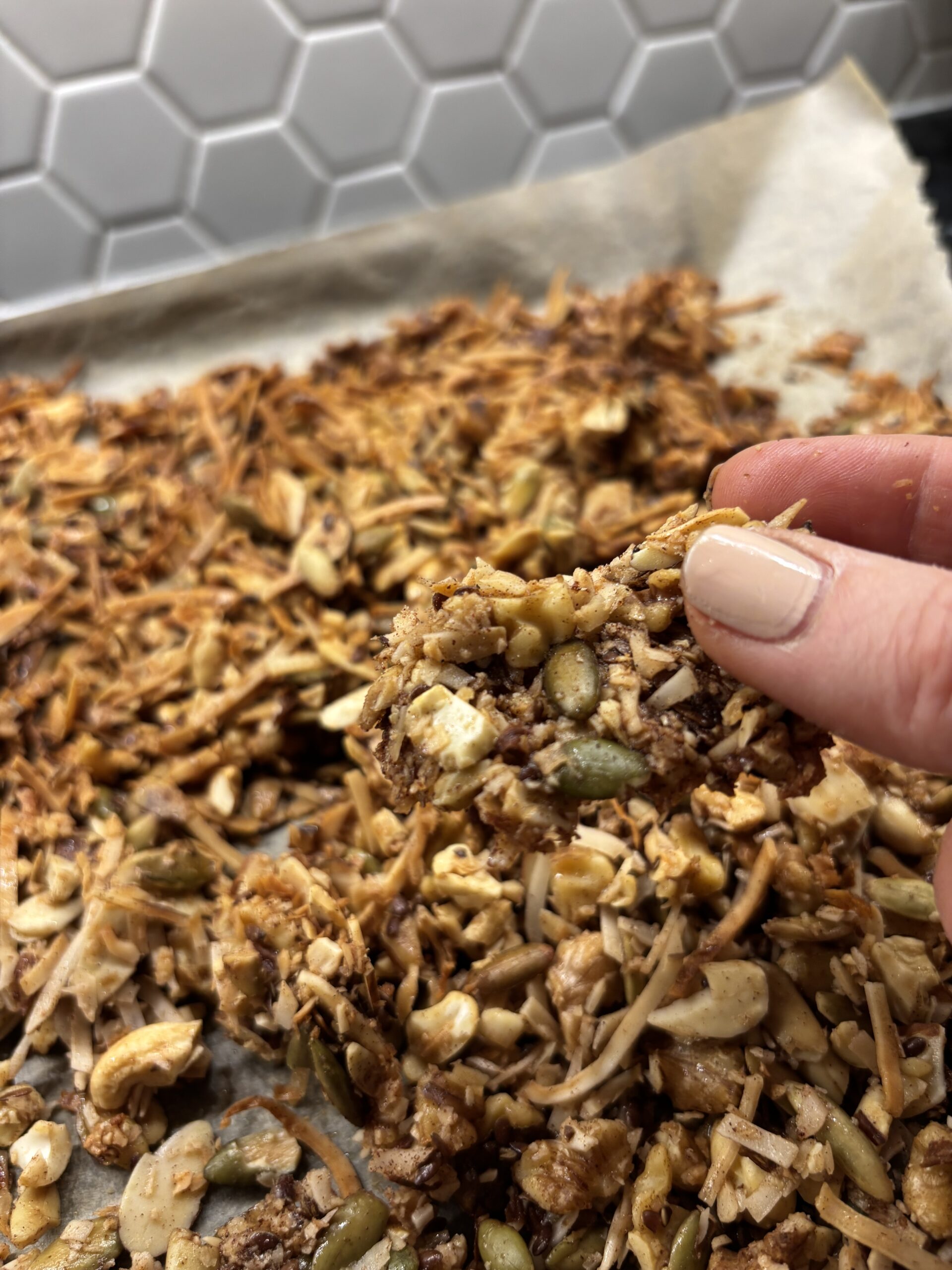
Grain-Free vs. Traditional Granola: Which Is Right for You?
Granola is a breakfast and snack staple—but not all granolas work the same way in the body. One of the most common questions I hear is whether grain-free granola is actually better than traditional oat-based granola.
The short answer? It depends on your body, your goals, and how you’re using it.
Let’s break it down so you can decide what makes the most sense for you.
Why Some People Choose Grain-Free Granola
Grain-free granolas are typically made with nuts, seeds, and coconut instead of oats or other grains. This changes how they digest and how they impact blood sugar.
1. Blood Sugar Stability
Grain-free granola is naturally lower in carbohydrates and higher in fat and fiber. For many people, this means:
- Fewer blood sugar spikes
- Less mid-morning energy crash
- Better appetite control
This can be especially helpful for individuals with:
- Insulin resistance or prediabetes
- PCOS
- Perimenopause or menopause
- A history of feeling shaky or hungry soon after carb-heavy breakfasts
2. Digestive Comfort
Even gluten-free oats can be irritating for some people.
Grain-free granola may be a better fit if you experience:
- Bloating or gas after eating grains
- IBS symptoms triggered by oats
- Sensitivity to gluten (even without celiac disease)
- The need for a short-term elimination diet
Because it skips grains altogether, many people find grain-free granola easier on their gut.
3. Longer-Lasting Fullness
Grain-free granola tends to be more calorie-dense, but also more satiating.
Thanks to its higher fat content:
- Smaller portions feel satisfying
- Hunger stays away longer
- It works well as a topping rather than a bowl-sized serving
This can be useful for anyone trying to reduce constant snacking or manage cravings.
4. Simpler Ingredient Lists
Homemade or minimally processed grain-free granolas often avoid:
- Refined flours
- Added fillers
- Industrial seed oils
This makes them appealing for people who prefer whole-food ingredients and less processing overall.
Why Traditional Oat-Based Granola Still Has a Place
Grain-free doesn’t automatically mean better for everyone. Traditional granola—especially when made with quality ingredients—can absolutely be part of a healthy diet.
1. Gut-Healthy Fiber
Oats contain beta-glucan, a type of soluble fiber that can:
- Support gut health
- Help lower LDL cholesterol
- Improve insulin sensitivity in some people
For those who tolerate oats well, this fiber can be a real benefit.
2. Better Fuel for Active Lifestyles
Traditional granola provides more carbohydrates, which can be helpful for:
- Athletes
- Dancers
- Runners
- Highly active teens or college students
In these cases, the extra carbs support energy demands rather than causing crashes.
3. More Affordable and Accessible
Oats are widely available and budget-friendly, making traditional granola:
- Easier to find
- Less expensive to make or buy
- Familiar and comforting
For many people, this makes oat-based granola a practical choice.
Grain-Free vs. Traditional: A Quick Comparison
| Grain-Free Granola | Traditional Granola |
|---|---|
| Lower carbohydrate | Higher carbohydrate |
| Higher fat | Higher fiber |
| Smaller portion size | Larger portion size |
| Blood sugar friendly | Energy boosting |
Neither option is “better”—the best choice depends on how your body responds.
How I Recommend Using Granola
Rather than thinking of granola as a cereal, I often suggest:
- Grain-free granola as a topping or snack
- Traditional granola as fuel or part of a balanced meal
Whichever you choose, pairing granola with protein (Greek yogurt, skyr, soy yogurt) and fiber (berries, chia, flax) helps create better blood sugar balance and longer-lasting energy.
The Bottom Line
Choosing between grain-free and traditional granola isn’t about rules—it’s about listening to your body.
If you feel better with stable energy and smaller portions, grain-free may be a great fit. If you tolerate oats well and need more fuel, traditional granola can absolutely work.
The best granola is the one that supports your digestion, energy, and lifestyle.
If you’d like help choosing or making a granola that fits your health goals, feel free to reach out or explore my favorite recipes and nutrition resources.
Ingredients
Method
- Preheat oven to 320 convection. Line a baking sheet with parchment paper.
- Add dry ingredients to a bowl and mix well.
- Add wet ingredients to a small bowl and stir to combine.
- Pour over dry ingredients and stir WELL to combine.
- Spread in an even layer onto parchment paper.
- Bake for 20 minutes, turn the pans and bake for another 5-10 minutes. Keep a close eye as you don’t want it to burn. The granola will turn a golden brown which is what you want!
- Let it cool completely before breaking it apart with your hands.
- Place in mason jars and try not to eat it all at once!
Notes
Nutrition Facts
Serving size: ⅛ of recipe Per serving- Calories: ~275 kcal
- Protein: ~6 g
- Total Fat: ~20 g
- Carbohydrates: ~20 g
- Fiber: ~4 g
- Total sugars: ~9 g [added sugars (maple syrup): ~7 g]
- Net Carbs: ~16 g
- Sodium: ~115 mg